LNEYA Refrigeradores industriais Fabricante Fornecedor


Como funciona o sistema de resfriamento de água industrial?
When using industrial machinery, a cooling system may be required to prevent the machine from overheating. Refrigeration equipment can effectively keep materials in the optimal temperature range, but how does the chiller work? Understanding the working principle of industrial water chiller is very helpful to select the best refrigeration system to meet the needs of users.
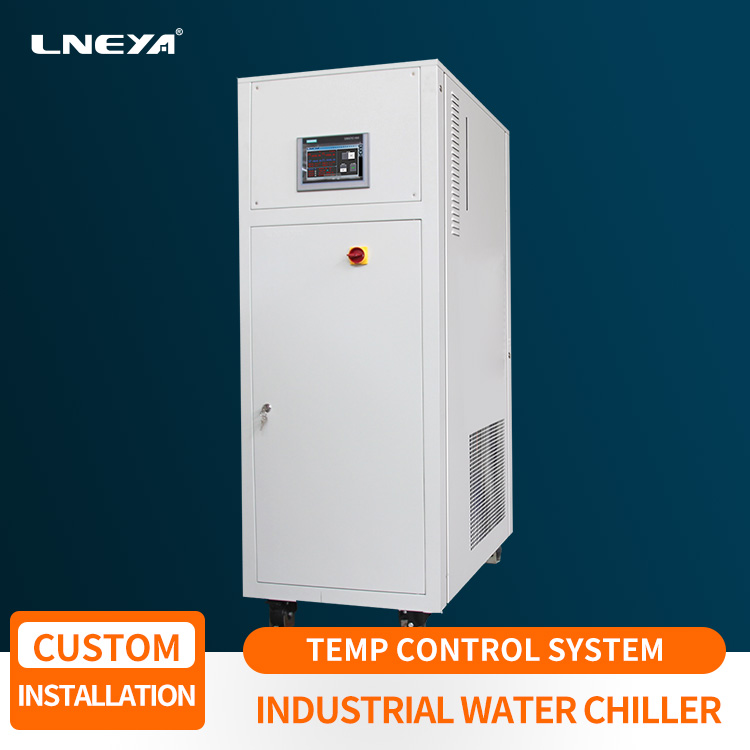
Working principle of industrial water chiller
In short, industrial water chillers cool process fluids. Process fluid (usually water or water / glycol mixture) is used to cool machinery, equipment, etc. The process fluid absorbs heat from the cooled object and then passes through the chiller, where the heat is removed from the fluid and transferred to the ambient air.
Refrigeration circuit
The industrial water or glycol chiller system consists of two main circuits: refrigeration circuit and fluid circuit. The refrigeration circuit consists of four parts: compressor, condenser, expansion valve and evaporator. The refrigeration circuit removes heat from the process fluid. The fluid circuit usually consists of fluid reservoir, pump, filter and heat exchanger. The fluid circuit carries process fluid around the cooled object.
Refrigeration cycle steps:
Refrigeration circuit is the most technical part of the working mode of chiller. The refrigeration cycle uses the principle of thermodynamics to effectively transfer heat from one region to another. In the case of a chiller, heat is extracted from the cooled fluid and transferred to the ambient air.
Compressor
The refrigeration cycle starts with the compressor. The compressor uses gaseous low-pressure and low-temperature refrigerant to compress it into high-pressure and high-temperature gas.
Condensador
The gas then flows through the coils in the condenser. In the condenser, air or water will flow through the coil and remove heat from the refrigerant. As the refrigerant loses heat, it will begin to condense until all the gases condense into a liquid.
Válvula de expansão
After leaving the condenser, the liquid passes through the expansion valve. The expansion valve limits the flow of refrigerant. When the high-pressure liquid passes through the expansion valve, it enters the evaporator.
Evaporador
The evaporator is where the refrigerant begins to evaporate. When the refrigerant evaporates, it becomes very cold and absorbs a lot of heat. The process fluid will interact with the cold refrigerant in the evaporator. Heat is removed from the fluid and transferred to the refrigerant. The refrigerant then enters the compressor and the cycle begins again.
Recomendações relacionadas
-

Influência do óleo de congelação no sistema de ensaio do motor de tração de veículos de energia nova
1952O perigo do óleo de refrigeração no sistema de teste do motor de tração do veículo de energia nova aumenta a temperatura de condensação e a pressão de condensação; a transferência de calor do condensador deteriora-se. Porque a película de óleo produzida pelo óleo que entra no sistema de teste do motor de tração de...
Ver detalhes -
-
Quais são as causas da corrosão nos refrigeradores industriais / refrigeradores de água?
2179Industrial chillers are now widely used in various industries, but as they become more and more widely used, many problems slowly emerge. Corrosion problems are also relatively common. Because everyone does not use the standard and the maintenance...
Ver detalhes -
-45 °C freezer manufacturers analyze compressor burnout detection and repair methods
1458In the -45 ° C freezer, the compressor is one of the more important components, the manufacturer Wuxi Guanya (LNEYA) tells everyone that once the compressor fails, it needs timely inspection and maintenance, then how to check the work and maintena...
Ver detalhes