LNEYA Refrigeradores industriais Fabricante Fornecedor


O método que o pequeno chiller refrigerado a água precisa de seguir ao carregar o refrigerante
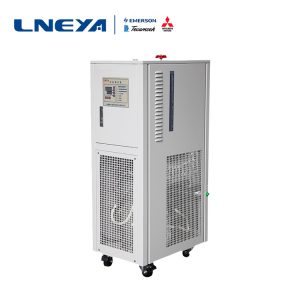
In our life, we believe that everyone is very familiar with refrigeration. In the central air conditioning and industrial production process cooling industry, small water cooled chiller is more common. This unit is composed of a compressor in the fuselage, a horizontal shell and tube condenser, an evaporator, a thermal expansion valve, and some related parts. Under the cooperation of these auxiliary parts, the overall small water cooled chiller is compact in structure, convenient in operation and control, and is popular among the public in the market.
For refrigeration systems that do not have a high pressure reservoir and a low pressure vapor-liquid separator, the control of refrigerant charge is particularly important. Because the refrigeration system is a condenser and also acts as a high-pressure reservoir, the refrigerant is stored in the condenser, and the condenser is cooled. The heat dissipation area is reduced and the condensing pressure is increased, resulting in a decrease in cooling capacity.
For the control of the refrigerant charge of such small water cooled chillers, the following methods are followed during the filling process:
First, touch the temperature of the condenser casing.
The upper outlet of the condenser outlet is heated above the outlet, and the outlet below the outlet is cool. (There is a description of the high temperature exhaust of the compressor in the inside. The cooling indicates that the small water-cooled chiller is a liquid space.)
Second, look at the inspiratory pressure.
Corresponding to the temperature of the refrigerant water in the evaporator. (That is, corresponding to the evaporation temperature.)
Third, look at the compressor return pipe temperature.
The high-temperature unit return pipe should be cooled and dew, but it can be dew condensation to the compressor return valve; the low-temperature unit return pipe should be frosted, but the frost can be connected to the compressor return valve. If condensation or frost builds up on the compressor casing, liquid refrigerant will enter the crankcase, causing the compressor to run back and cause liquid problem.
Recomendações relacionadas
-
Instruções de funcionamento da câmara de ensaio a baixa temperatura
1723A câmara de teste de baixa temperatura é um equipamento de teste necessário na aviação, automóvel, electrodomésticos, investigação científica e outros campos. É utilizada para testar e determinar os parâmetros e o desempenho de equipamentos eléctricos, electrónicos e outros...
Ver detalhes -

Qual a importância do isolamento do chiller?
2058Resposta: Para o chiller, se for operado a alta temperatura, uma grande quantidade de ar frio no chiller industrial pode ser severamente perdida. Após o efeito de vedação do ambiente de utilização, através de uma preservação atempada e eficaz do calor, a operação pode ser...
Ver detalhes -
What Are the Commonly Used Refrigerants For Brand Selection of Refrigerating Chillers?
1803When the enterprise chooses the refrigerant in the cryo chillers unit brand, what should it need to pay attention to the present market commonly used refrigerant? What is the difference between specific refrigerant properties? Take a look at the b...
Ver detalhes -
Partilha de conhecimentos sobre a limpeza de condutas de chillers de alta potência
1404Para muitas empresas, devido à fraca sensibilização para a manutenção diária dos chillers de alta potência, os chillers industriais de alta potência não são objeto de uma manutenção eficaz há muito tempo. Se os chillers industriais de alta potência não tiverem a manutenção necessária, ...
Ver detalhes