 LNEYA Refrigeradores industriais Fabricante Fornecedor


How a Cooling System Keeps Your Furnace Running Longer
Every furnace runs hot. That is its purpose. Too much heat left in place turns performance into a risk. From our work with heat treatment lines, foundries, and induction systems, uncontrolled heat ages components fast and causes unexpected downtime.
A proper furnace cooling system does more than lower temperature. It protects electrical parts. It keeps structure stable. It prevents costly stops.
Why Furnaces Overheat Common Causes
Even a well designed furnace overheats when heat cannot be moved away. Often the root cause is operational rather than design.
Continuous high load
Many production lines run furnaces at or near full duty for long shifts. If the chamber never gets a break, coils and power electronics run hot all the time. That leads to oxidation and premature part failure.
Blocked or dirty cooling paths
Scale, dust, or fouling in coolant channels cuts flow and heat transfer. The first sign is wild temperature swings. The second sign is damage to insulation or coil varnish.
Poor air circulation in the plant
Some furnaces rely partly on ventilation. When fans slow or vents clog, heat builds and raises ambient temperature around the unit. That reduces cooling efficiency and stresses components.
Cooling system mismatch with the process
We often see oversized furnaces paired with undersized or generic chillers. The cooling equipment then runs at its limit all the time and cannot control temperature under real loads.
What Happens Without Proper Cooling
Failing to install the right cooling system creates a chain reaction.
Coil and insulation damage
Overheated coils lose insulation integrity. Copper windings may short. Repair costs climb and unplanned outages follow.
Redução da vida útil do equipamento
Thermal fatigue cracks refractories and weakens welds. Equipment that should last a decade can fail in a few years.
Product quality problems
Temperature variation creates inconsistent metallurgical properties and product defects. Yield drops and rework goes up.
Higher maintenance and energy cost
Frequent stops, part swaps, and emergency repairs increase total cost of ownership. Inefficient cooling also wastes energy.
The Role of Cooling Systems in Furnace Operation
A furnace cooling system has two clear jobs. The first is to remove heat from hot zones. The second is to keep temperatures stable across critical parts.
In induction and electric furnaces, coils and power electronics generate concentrated heat. A closed loop that circulates coolant moves that heat away and keeps component temperatures steady. That prevents expansion mismatch and keeps electrical resistance predictable. Stable temperature equals repeatable results.
Cooling systems also add safety. Sudden coil failure or chamber overheating can be dangerous. That is why we design chillers and cooling loops with automatic feedback, flow detection, and alarms. The cooling system protects equipment, process, and people.
Benefits of Adding a Cooling System
Installing a proper cooling system brings benefits that pay back quickly.
Longer equipment life and lower failure rates
Less thermal stress means fewer cracks and longer component life.
Consistent process quality
Temperature control produces repeatable results and stable product properties.
Reduced downtime and maintenance calls
Predictable cooling lowers emergency stops and unscheduled repairs.
Better energy efficiency
A right sized and well controlled chiller reduces power waste and improves overall plant efficiency.
Improved safety and regulatory compliance
Temperature control reduces hot spots and the associated risks.
Types of Cooling Systems for Furnaces
Not every furnace needs the same cooling approach. Choose based on heat load, operating temperature, and environment.
Water cooled chiller systems
Closed loop water chillers are the most common solution. They circulate chilled water through coils or heat exchangers. Water offers high heat transfer and precise control. These systems fit induction and electric furnaces well.
Oil chiller systems
Thermal oil works where water cannot. For high temperature applications above the boiling point of water, oil keeps stable viscosity and prevents vapor lock. Oil cooling suits vacuum furnaces, annealing lines, and high temperature reactors.
Air cooled systems
Forced air cooling is simple and low cost. It works for small or intermittent duty furnaces. Air cooled chillers remove heat from the refrigerant using fans and condensers. They save water where water supply is limited.
How to Choose the Right Furnace Cooling System
Selecting the right cooling system is a practical exercise. We follow a few rules when advising clients.
Start with real heat load numbers
Calculate steady state heat and transient spikes. Use mass flow, specific heat, and temperature rise to size the system. Add headroom for peaks.
Learn more:
Chiller load vs chiller capacity
Match temperature range to the process
If the process runs above 100 ℃, water alone may not work. Consider oil cooled options or specialty fluids.
Check site utilities and space
Water supply, ventilation, and available floor area affect the choice. Water cooled chillers need tower or plant water. Air cooled units need good air flow.
Ask about control and integration
PLC or PID control with logging and alarm outputs improves reliability. Communications such as Modbus or TCP help integrate cooling into plant automation.
Plan for maintenance and spare parts
Easy access to filters, pumps, and sensors reduces downtime. A supplier with local support and fast spare parts matters.
LNEYA Cooling Solutions for Industrial Furnaces
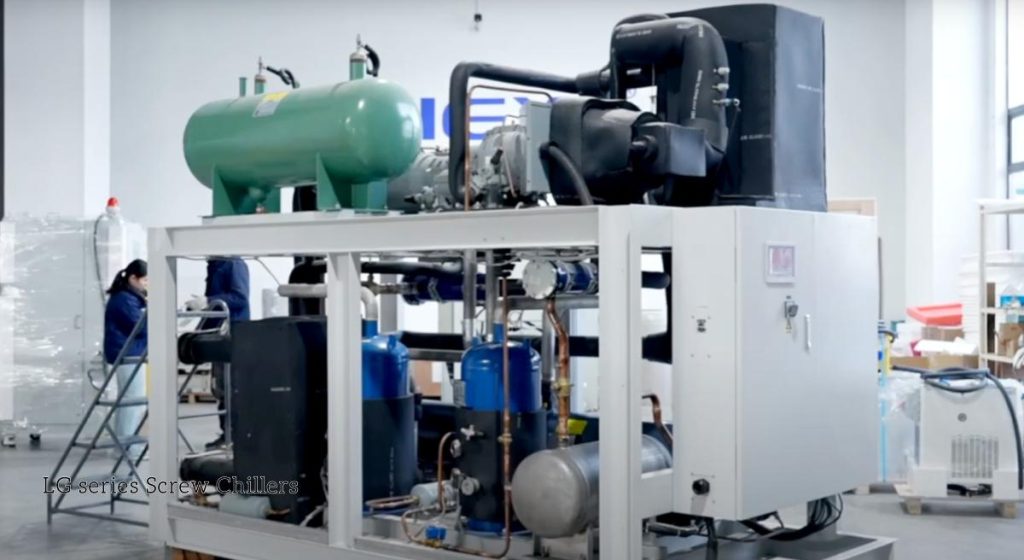
At LNEYA, our engineers design chiller systems for a wide range of furnace types. We deliver water based chillers with tight temperature control for induction applications. We supply oil based units for high temperature and vacuum processes. Every system includes flow and temperature protection, automatic feedback, and remote diagnostics where needed.
If you have heat load numbers and process targets, our team can produce a tailored spec and a tested solution. A reliable cooling system is the most effective way to protect furnace performance, improve yield, and keep operations running shift after shift.

Blogues recentes
- What Does a 200 Ton Chiller Cost
- Temperature Control in Photolithography
- Is a Used Chiller a Good Idea
- Chiller Components and Refrigeration Fundamentals Guides
- Chiller Types and Selection Guides
- How Does a Peltier Cooler Work
- Peltier Chiller vs. Compressor Chiller
- What Is a Peltier Chiller
Catálogo
- Dezembro 2025
- Novembro 2025
- Outubro 2025
- Setembro 2025
- Agosto 2025
- Julho 2025
- Junho 2025
- Maio 2025
- Março 2025
- Fevereiro 2025
- Janeiro 2025
- Dezembro 2024
- Novembro 2024
- Outubro 2024
- Setembro 2024
- Agosto 2024
- Julho 2024
- Junho 2024
- Maio 2024
- Abril 2024
- Março 2024
- Fevereiro 2024
- Setembro 2023
- Julho 2023
- Junho 2023
- Maio 2023
- Janeiro 2023
Etiqueta
refrigerador arrefecido a ar refrigerador Instalação de chillers Chiller Maintenance chiller refrigerant refrigeradores Congelador de montagem a frio refrigerador de refrigeração sistema de arrefecimento e aquecimento sistema de arrefecimento sistema de controlo dinâmico da temperatura chiller energeticamente eficiente refrigerador à prova de explosão congelador circulador de aquecimento refrigerador industrial refrigeradores industriais arrefecimento industrial congelador industrial frigorífico industrial reator de camisa refrigerador de laboratório refrigerador de baixa temperatura notícias refrigerador de óleo refrigerador de processo resfriamento de processo refrigerador do reator arrefecimento do reator arrefecimento do reator aquecimento aquecimento do reator arrefecimento bomba de circulação refrigerada refrigerador de parafuso refrigerador de semicondutores refrigerador de teste de semicondutores sundi tcu controlo da temperatura câmara de ensaio termóstato refrigerador de temperatura ultra baixa refrigerador de ensaio de veículos refrigerador de água refrigerador arrefecido a água
Contactar-nos
Chillers relacionados


FALE CONOSCO
TEL:
EMAIL:
WeChat & WhatsApp:

Wechat QR

Tem alguma pergunta ou precisa de um orçamento? Preencha o formulário abaixo e nossa equipe entrará em contato dentro de 24 horas.

