 LNEYA Refrigeradores industriais Fabricante Fornecedor


Chiller Refrigerant Charging: Tools, Steps and Tips
Most chiller manufacturers sell their units pre-filled with refrigerante. Upon receipt, users only need to connect the piping, charge the líquido de refrigeração, and plug in the power cord before use. However, some users who have already purchased their own refrigerant or have existing stock may choose to save money by purchasing pre-filled chiller units and then filling them themselves.
How do you properly charge a chiller with refrigerant? This article explains the common tools, detailed steps, and precautions required during the charging process.
1. Preparing Refrigerant Charging Tools
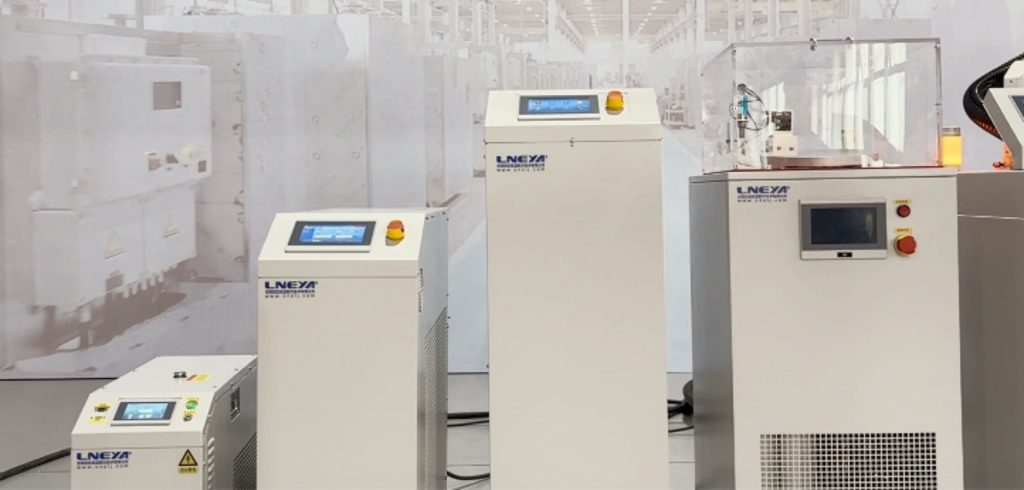
Preparing the refrigerant charging tools in advance can save you significant time. Common tools recommended by our engineers include:
• Refrigerant charging equipment: such as a manifold gauge set, charging hose, and refrigerant tank
• Vacuum pump: for extracting air and moisture from the circulation system
• Electronic scale: for accurately charging the refrigerant
• Safety equipment: gloves and goggles
2. Checking the Chiller
Before charging refrigerant, ensure the chiller is functioning properly and the power cord is off. Professionals will use soapy water or an electronic leak detector to check for leaks. Avoid further malfunctions caused by refrigerant leaks after refrigerant filling.
3. Connecting Equipment
After ensuring that the equipment is not faulty, connect one end of the charging hose to the refrigerant tank and the other end to the low-pressure port of the manifold gauge.
4. Vacuuming
Open the pressure gauge and start the vacuum pump to remove all air and moisture from the system. This process typically takes 15-30 minutes, until the pressure reaches below -0.1 MPa. Then, turn off the vacuum pump and pressure gauge. Importantly, turn off the pressure gauge before turning off the vacuum pump to ensure the system remains under vacuum.
5. Charging Refrigerant
During the refrigerant charging process, it is important to constantly monitor the charge level, so a digital scale is required. Before charging, place the refrigerant tank on the scale and record the initial weight.
Then, invert the tank and slowly open the valve to begin charging. During this process, carefully monitor the pressure gauge to ensure the low-pressure side pressure is within the normal range (usually between 0.4 and 0.7 MPa).
More refrigerant isn’t always better. The charge volume should be strictly controlled according to the chiller’s specifications and manufacturer’s recommendations. You can use a digital scale to monitor the weight of the refrigerant being charged to ensure it’s within the normal range.
6. Check System Operation
After charging is complete, close the refrigerant tank valve, disconnect the charging pipe and pressure gauge. Then, start the chiller and verify normal operation. This can be determined by observing the pressure gauge reading and the system’s cooling performance.
7. Check for Refrigerant Leaks
Although pre-charging checks are already performed, a helium test and pressure hold check after charging are also essential. After starting the system, check all system connections for refrigerant leaks.
8. Record Data and Organize Tools
To facilitate subsequent maintenance and management, you should record the type, weight, and operating pressure of the refrigerant charged. Additionally, close all valves, organize charging tools and equipment, and ensure a clean and tidy workspace.
9. Precautions
• When charging refrigerant, always follow relevant safety regulations and avoid direct contact with the refrigerant to prevent frostbite.
• Pay close attention to pressure changes during the charging process to ensure the system operates within a safe range.
• If you are unfamiliar with the operation, it is recommended that you consult a qualified technician to perform the charging.
Conclusão
Need help with chiller refrigerant charging or troubleshooting cooling performance? Contact LNEYA’s technical team for expert support.

Blogues recentes
- What Does a 200 Ton Chiller Cost
- Temperature Control in Photolithography
- Is a Used Chiller a Good Idea
- Chiller Components and Refrigeration Fundamentals Guides
- Chiller Types and Selection Guides
- How Does a Peltier Cooler Work
- Peltier Chiller vs. Compressor Chiller
- What Is a Peltier Chiller
Catálogo
- Dezembro 2025
- Novembro 2025
- Outubro 2025
- Setembro 2025
- Agosto 2025
- Julho 2025
- Junho 2025
- Maio 2025
- Março 2025
- Fevereiro 2025
- Janeiro 2025
- Dezembro 2024
- Novembro 2024
- Outubro 2024
- Setembro 2024
- Agosto 2024
- Julho 2024
- Junho 2024
- Maio 2024
- Abril 2024
- Março 2024
- Fevereiro 2024
- Setembro 2023
- Julho 2023
- Junho 2023
- Maio 2023
- Janeiro 2023
Etiqueta
refrigerador arrefecido a ar refrigerador Chiller Maintenance refrigeradores Congelador de montagem a frio refrigerador de refrigeração sistema de controlo dinâmico da temperatura chiller energeticamente eficiente circulador de aquecimento refrigerador industrial refrigeradores industriais arrefecimento industrial congelador industrial frigorífico industrial reator de camisa refrigerador de laboratório refrigerador de baixa temperatura notícias refrigerador de processo resfriamento de processo arrefecimento do reator aquecimento do reator arrefecimento bomba de circulação refrigerada refrigerador de parafuso refrigerador de semicondutores refrigerador de teste de semicondutores sundi tcu controlo da temperatura câmara de ensaio termóstato refrigerador de temperatura ultra baixa refrigerador de ensaio de veículos refrigerador de água refrigerador arrefecido a água
Contactar-nos
Chillers relacionados


FALE CONOSCO
TEL:
EMAIL:
WeChat & WhatsApp:

Wechat QR

Tem alguma pergunta ou precisa de um orçamento? Preencha o formulário abaixo e nossa equipe entrará em contato dentro de 24 horas.

